
 From the Author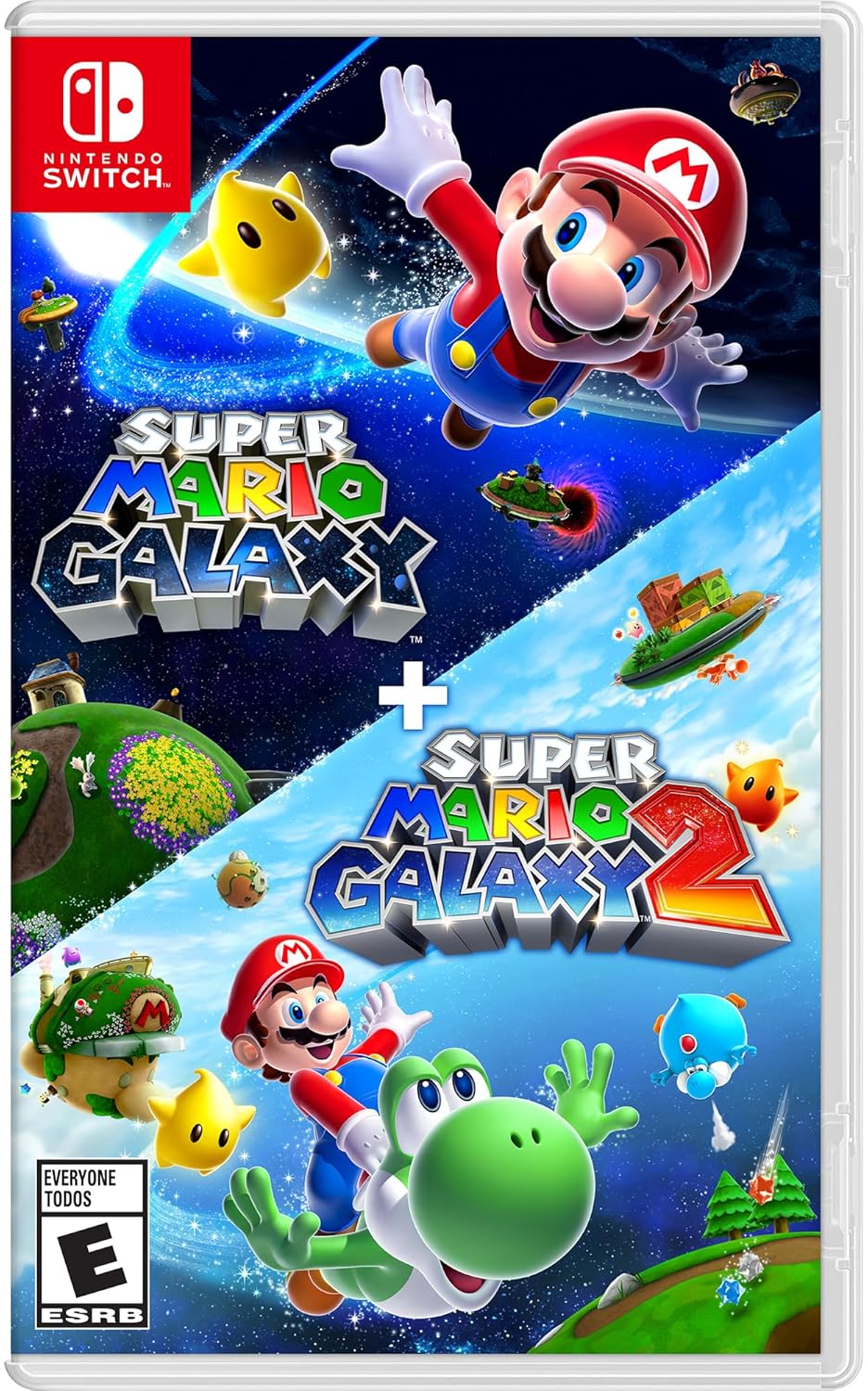
The creative decisions inside Super Mario Galaxy make more sense once you understand the game it was quietly responding to. Super Mario Sunshine had divided players and critics (and does so to this day) over its difficulty, particularly in its optional Shine Sprite stages, and the feedback Nintendo absorbed clearly shaped what Galaxy became when it arrived on the Wii in 2007. It was more forgiving, more immediately spectacular, and more concerned with delivering a sense of wonder than testing the limits of what a player can execute under pressure. Playing it now on Switch, both the genius of that creative vision and the costs of that particular overcorrection are easy to see.
In Super Mario Galaxy, Bowser crashes the Mushroom Kingdom's star festival, kidnaps Princess Peach, and retreats to the center of the universe. Mario's pursuit takes him across a series of galaxies, each built around distinct gravitational physics that make the platforming feel unlike anything in the franchise before or since. Rosalina, the guardian of the Comet Observatory that serves as the game's hub, provides the narrative anchor. This review was played on Nintendo Switch as part of Super Mario 3D All-Stars, though now both Super Mario Galaxy and Super Mario Galaxy 2 are available for purchase for both the Nintendo Switch and the Nintendo Switch 2.
The physics are where Galaxy earns its reputation. Running along the curved surface of a small planetoid, launching between gravitational fields, orienting yourself upside down relative to where you started: the game makes all of this feel intuitive within minutes and consistently inventive across its full runtime. The visual design supports it, with each galaxy rendered in a distinct aesthetic palette that makes the game feel genuinely handcrafted. The soundtrack, composed by Koji Kondo and Mahito Yokota, is the best in the franchise's history and possibly one of the best in the medium, using a full orchestral arrangement that gives the game an emotional scale its contemporaries rarely matched.
The Switch version introduces a problem the Wii original did not have to solve. On the Wii, collecting Star Bits with the pointer felt natural and added a layer of incidental interactivity to exploration. On Switch in TV mode, that function maps to the right analog stick, which pulls your thumb away from the jump button at moments when you need it and never quite replicates the ease of the pointer. Meanwhile in handheld, Star Bits are collected by touching the screen, which is cumbersome at times. It is not a dealbreaker, but it is a persistent friction that compounds across certain stages more than others.
The difficulty question is the more significant issue. Galaxy is a gentle game, and while that accessibility is part of what makes it so broadly enjoyable, experienced players will move through the main story without much resistance. The optional stars add challenge late in the run and a second playthrough as Luigi tightens the platforming margins enough to feel meaningfully different, but the path of least resistance through Galaxy is considerably easier than Sunshine and easier still than Super Mario 64 in its more demanding moments. This problem is made all the worse when you take into consideration the touch screen being used instead of the Wii remote for some puzzles, which is inherently more precise with less jank. As an overcorrection it is understandable. As a design choice it leaves something on the table.
Super Mario Galaxy remains one of the best games Nintendo has ever made, and with Super Mario Galaxy + Super Mario Galaxy 2 now available on both Switch and Switch 2, there has never been a better or more complete way to experience it. The collection pairs it with its sequel and brings improved resolution across both platforms, which makes the already stunning visual design even easier to appreciate. Hopefully whatever comes next in the 3D Mario lineage finds a way to split the difference between Galaxy's accessibility and Sunshine's willingness to push back.
★ ★ ★ ★
 From the Author