


 Tom King (Author), Bilquis Evely (Illustrator) Format: Hardcover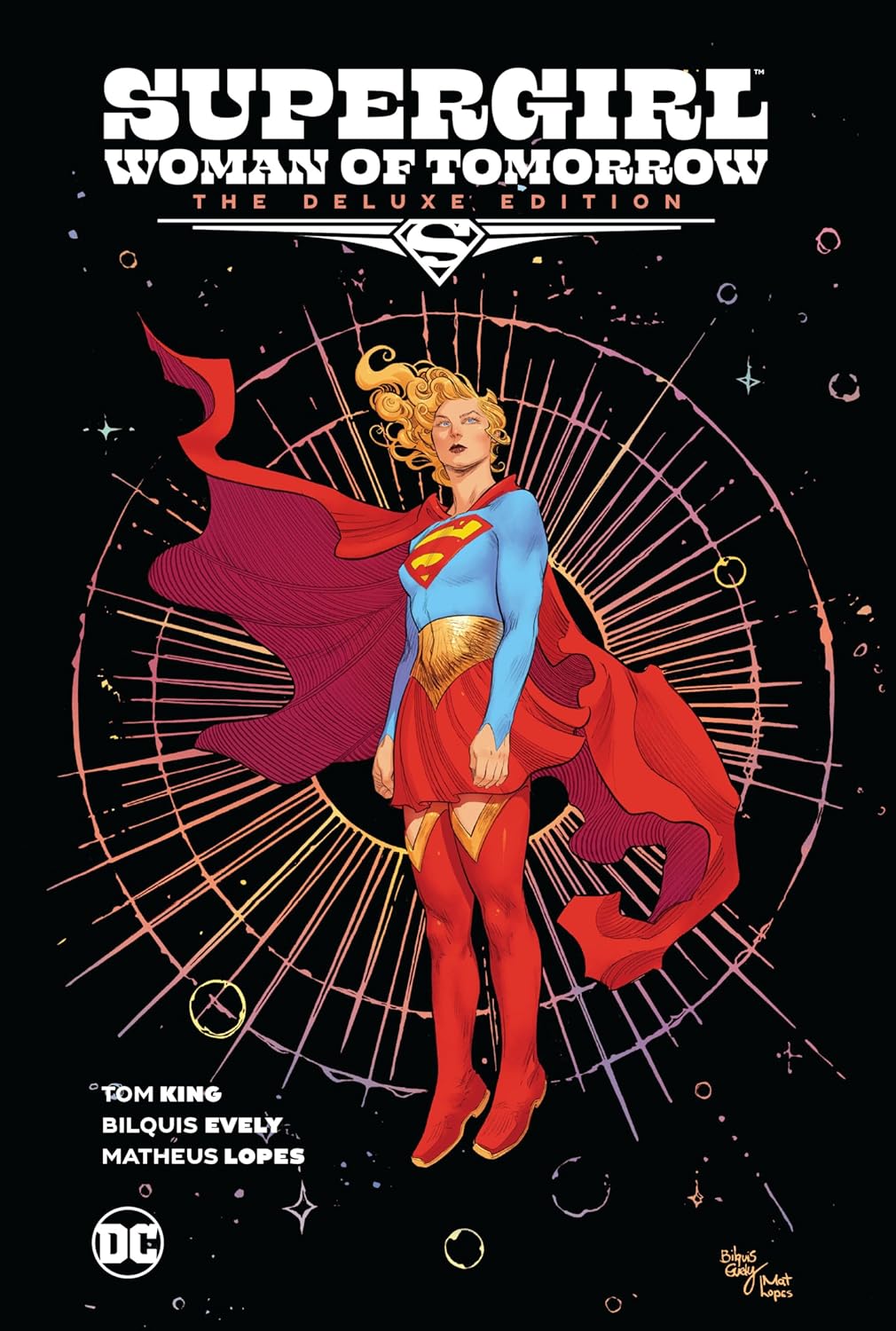
Revisionist history is one of the most reliable forces in pop culture, and it runs on a simple engine: whatever is new gets measured against an idealized version of whatever came before, no matter how poorly that older thing was actually received at the time. The clearest recent example is Star Wars, where a prequel trilogy that audiences openly disliked on arrival got quietly rehabilitated into a golden age the moment a sequel trilogy gave people something newer to be unhappy about. The mechanism is always the same: the new thing is bad, therefore the old thing must have been good, and the actual quality of the old thing becomes irrelevant to the argument. With a new Supergirl in theaters and the discourse already warming up, it is worth getting ahead of the inevitable claim that the 1984 Helen Slater film was secretly fine all along. It was not. It is, on a rewatch, one of the worst films this show has ever covered, and the only thing it is useful for is the contrast it draws with what a Supergirl movie can be.
Supergirl opens in Argo City, a fragment of Krypton that survived the planet's destruction inside a pocket of trans-dimensional space, where young Kara Zor-El lives under the mentorship of the wizard-artist Zaltar. When Zaltar's carelessness sends the Omegahedron, the orb that powers the entire city, hurtling through a dimensional rift to Earth, Kara follows it to retrieve the device before Argo runs out of power and everyone she knows dies. On Earth she takes the alias Linda Lee, enrolls in a school, and runs up against Selena, a power-hungry would-be witch who has found the Omegahedron and intends to use it to rule the world. Helen Slater plays Kara, Faye Dunaway plays Selena, and Peter O'Toole, Mia Farrow, and Brenda Vaccaro also star. Jeannot Szwarc directs.
The core failure is structural: the film establishes life-or-death stakes in its opening minutes and then proceeds as if it has forgotten them entirely. The premise hands the story a ticking clock, Argo City has days before its power runs out, and Kara responds to that countdown by rushing out as the only person who can save the city, and then drifting. She arrives on Earth, discovers her powers, floats around marveling at them, wanders into town, and enrolls in a school, all with no urgency or sense of purpose whatsoever, as though the apocalypse she left behind can wait. Worse, the plot only advances through coincidence. The school she picks at random happens to be the exact place that connects her to the person who has the orb, a contrivance the film never bothers to disguise as strategy. She does not deduce anything or follow a trail. She stumbles into the right location and the movie pretends that counts as a plan. When your protagonist's investigation is indistinguishable from aimless luck, the stakes you spent the prologue establishing evaporate.
The look does the film no favors either. It lands in that generic register of late-seventies and early-eighties science fiction, the Logan's Run and lesser-Planet of the Apes-sequel mode where nothing commits to a distinct design language. Argo City reads as vaguely otherworldly and nothing more. You do not need a perfect memory of how Superman: The Movie rendered Krypton to know it had a specific, striking visual identity; this has none, and the absence leaves the whole production feeling like a placeholder for a more imaginative film that never got made.
The deeper issue, and the one that makes the comparison to the new film so instructive, is that the 1984 Kara has no agency. She is not a protagonist so much as a soft center the plot revolves around. She arrives on Earth and immediately slots into a stereotypically gentle, passive femininity: she discovers flight by giggling and twirling delicately in the air, she is soft-spoken and unforceful, and the film's central conflict is a romantic one, two women effectively competing over a man, with world domination as the backdrop rather than the point. Even the villainy is coded in fairy-tale terms, Selena as a literal witch, which at least nods cleverly at the old Kryptonian vulnerability to magic, but the overall effect is a heroine defined entirely by sweetness and reaction. Things happen to her, she rarely makes them happen. A story whose lead has no real agency in her own plot is a story with a hole at its center, because the most basic requirement of a protagonist is that she drive the narrative rather than get carried along by it. The problem is not that Kara is gentle, gentleness can be a compelling heroic trait, the problem is that the gentility is treated as virtue and replaces actual characterization and agency.
This is exactly where the new Supergirl clarifies what the old one lacked, and the comparison is not close. The new film's Kara is jaded, angry, shaped by a hard life into a specific and active worldview, a character with interiority rather than a paragon to be admired. She makes decisions. She defies her parents to live the life she wants rather than the one they pre-ordain her to, she pursues her own revenge, and the help she extends to Ruthye, however reluctant, is a choice she makes rather than a circumstance she falls into. Whatever that film's flaws, and it has them, it is built around a person with a point of view and the will to act on it. The 1984 version is built around a costume that smiles. One of these is a character, the other is a mannequin the plot pushes from scene to scene.
It is worth being honest about why this matters beyond a simple quality comparison, because the revisionism is already loading its weapons. The bad-faith version of the coming discourse will hold up Slater's film as the "real" Supergirl that the new one betrays, a move that requires pretending the 1984 film was good, which it was not, and ignoring that its heroine was a passive figure with no command over her own story. The honest comparison ends quickly. The new film is better made, better acted, better looking, and built on an actual character, and there is no good-faith argument that the two are anywhere near each other in quality. If there is a saving grace here, it is that the 1984 Supergirl lacks the built-in fandom and the later redemptive material that let the Star Wars prequels get rehabilitated. There was no animated series, no expanded canon, nothing to retroactively argue this film up. Slater's Kara simply ends here, and that may spare us the worst of the revisionism.
The 1984 Supergirl is not a fun-bad curio worth seeking out for camp value the way one would look at Troll 2 or The Room, which its defenders will soon insist. It is a slow, illogical film with a hollow center, and its only real value in 2026 is as a measuring stick of how far we've come in earnestly adapting a comic without shying away. Watch it, if you must, to understand exactly how far the character has come, and then go see the version that actually gives Kara something to do. There is no revisionism that survives putting the two side by side in good faith.
★