
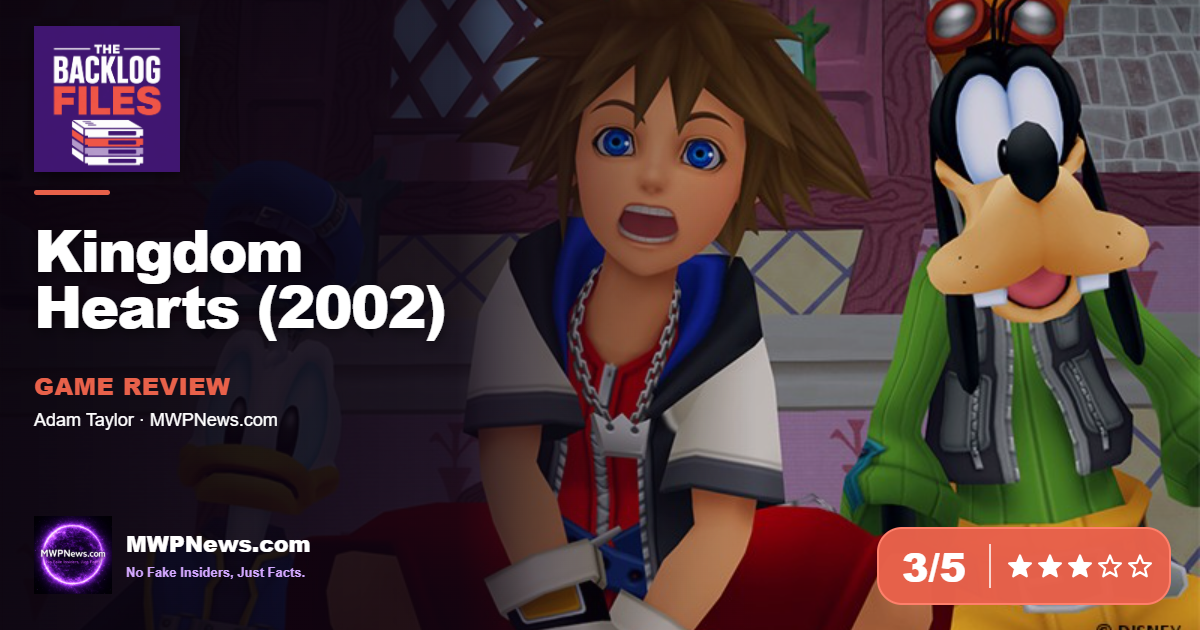
 Adam Taylor
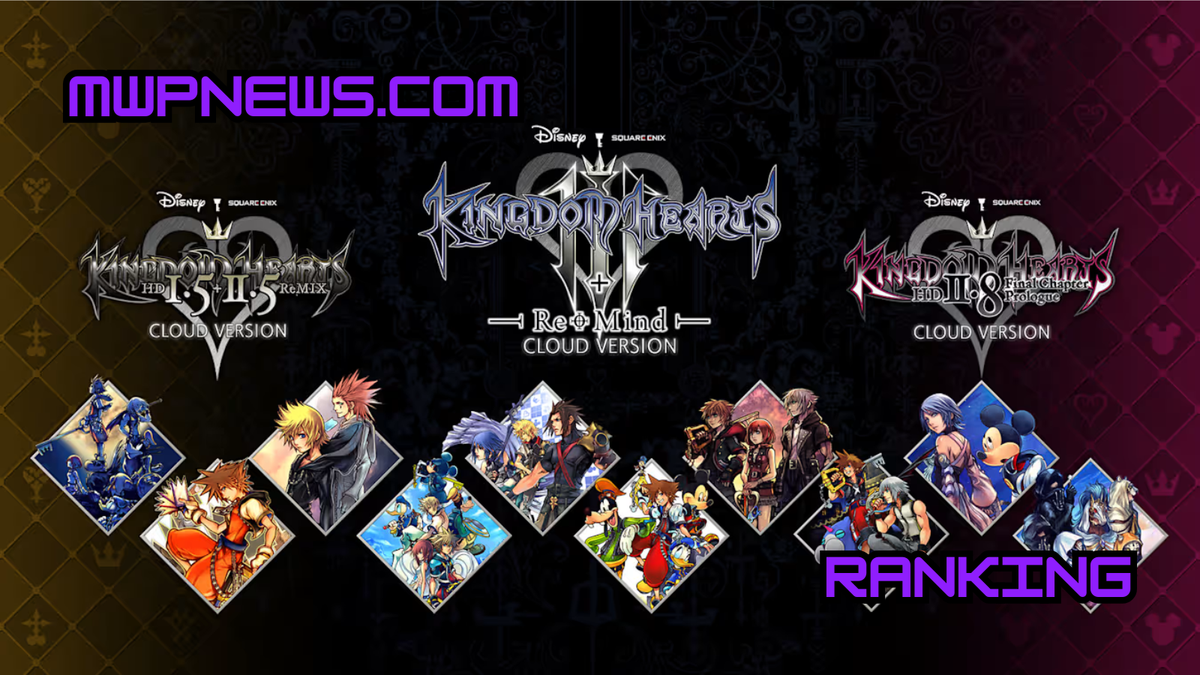
Every long-running franchise has a first chapter that the series spends years quietly improving upon, and revisiting that chapter with clear eyes is a specific kind of pleasure and a specific kind of wince. It's part of the nature of video games as a medium; it is an inherently iterative process so what works the first time will be expanded on and what didn't will be omitted. Kingdom Hearts is one of the stranger success stories in gaming, an action role-playing game that fused Square’s melodrama with Disney’s back catalogue and somehow became a generation-defining obsession rather than a cynical corporate crossover. With the arrival of the new Kingdom Hearts Collection [I~III], which gathers nearly the entire saga into one package, it is the ideal moment to go back to the start and judge the original not through the haze of nostalgia but as if it arrived today. And judged that way, honestly, the first Kingdom Hearts is a game clearly finding its footing, carried across the line by charm and ambition rather than by execution.
Kingdom Hearts, here in its enhanced Final Mix form, casts you as Sora, a boy swept off his island home into a war between light and darkness, armed with a giant key called the Keyblade and accompanied by Donald Duck and Goofy as he travels between worlds drawn from Disney’s films. The structure is a tour: each world is a self-contained Disney setting, Tarzan’s jungle, the Little Mermaid’s ocean, the belly of Monstro the whale, strung along a larger story about a creeping darkness and the mysterious figure of Ansem. It is a wildly ambitious premise for 2002, and the ambition is the point, because the ambition is what the execution keeps failing to match.
The core problem, honestly reckoned with, is that the game is tanky and controls in ways that actively dampen the fun. This is an active, real-time combat system rather than a turn-based one, which means you are maneuvering Sora through 3D space in the thick of a fight, and the game simply does not have the spatial fluency to support that. Too often an attack would send the camera swinging to reposition itself behind Sora, which would snap the lock-on to a different enemy and shatter the combo I was building, forcing me to start over. A combat system that punishes you for its own camera is a combat system fighting the player, and the first Kingdom Hearts does it constantly.
The design around the combat compounds the friction. Fundamental abilities, the power to guard, even the ability to see an enemy’s remaining health, are locked behind later level-ups, which means the early game is rougher than it has any right to be before the tools that make it playable arrive. It may seem like a small complaint, but trying to fight bosses like the Shadow Sneak in Deep Jungle or Cloud in Olympus Coliseum are a lot more difficult when you don't know how much health the enemy has left and you have to balance healing. Sora’s combos feel weak and never meaningfully improve with stronger attacks tied to MP use. Magic is tied to a shared stat (the MP dictates both how much magic you can use and how powerful your spells are) in a slightly awkward way, traversal is slow, and the gummi ship sections, the on-rails space-travel minigame between worlds, are a boring obligation with no real incentive to replay.
Worst of all is the near-total absence of maps, a problem the series would eventually fix but which here turns worlds like the maze of Monstro’s innards into pure aggravation. And the worlds themselves lean heavily on busywork, wandering from area to area fighting the same Heartless to pad the runtime, with the Deep Jungle stretch a particular slog and the underwater Atlantica standing as the single thing most likely to make a player never want to touch the game again. In the original game, there were no reaction commands (that would not come around until Kingdom Hearts 2) and interacting with doors, chests, and things of that nature were bound to the bottom of the command deck. This created the necessity where, in active combat, the game locking you out of interacting with things made sense. Now the fact that you have to clear out any heartless around to use a Trinity or ride the dolphin makes the game just a little more annoying.
It is worth being fair about the places the design reaches for something interesting even when it fumbles the landing. The idea of hunting down the hundred-and-one Dalmatians scattered across the worlds is a charming collectible in theory, undercut only by the fact that it gates a game-breakingly strong spell behind the effort. The Final Mix additions bring their own wrinkles, including a punishing special Heartless and a farming loop for the rare Serenity Power, the kind of late-game, magic-maxed, stop-and-combo grind that is more tedious than rewarding. Hollow Bastion, the game’s late-game hub, is a real high point, and the whole thing carries a distinct edgy-early-2000s energy that, however dated, is unmistakably of its moment and part of its charm. This is a franchise mid-invention, and you can feel it finding what works in real time.
For all the complaints, the game does hold together well enough to remain fun, and that is the honest bottom line. Playing it the way I play Pokémon, offense over everything, punch it until it dies, I found the back half easier than I remembered; the Ansem fight that once gave me real trouble as a kid went down without much resistance this time, which says something about how cheesable the systems become once they open up. I did not fully complete it, playing through all the worlds and clearing the Hades Cup to earn the bonus ending rather than chasing every superboss, which brings up the one baffling omission of this re-release: the console versions of the collection ship without the achievements the Steam version has. That is an unforced error, because achievements are exactly the kind of carrot that would have pushed me to go back and take on the Phantom and Kurt Zisa and the rest of the optional endgame. Leaving them out gives a completionist less reason to linger, and there is no good explanation for the cut. For reference, I did platinum the game on PlayStation 3, PlayStation 4, and on Epic but it's just missing a little incentive here to go do that. I will eventually after this experiment, but right now I didn't feel a reason to aggravate myself fighting Sephiroth.
The original Kingdom Hearts is a three out of five, a game whose reach exceeds its grasp but whose grasp is sincere enough to carry it. The combat fights you, the worlds pad themselves, the camera has a mind of its own, and yet the ambition, the charm, and the sheer strangeness of the premise keep it watchable and, in its better moments, great. It is the foundation the franchise would spend the next two decades building into something far more refined, and playing it now, with the whole saga newly available in one place, is a worthwhile reminder of how rough and how promising a beginning can be at the same time. It is well worth experiencing, flaws and all, as the first step of a series that learned from every one of these mistakes. Chain of Memories is up next.