
 Adam Taylor
Years ago, back when Infinity War and its then-untitled sequel were on the horizon, the question of where Marvel goes after Thanos was already live, and one answer always seemed obvious: bring back Ultron. Age of Ultron technically closed the book on the character, but the ending never actually prevented his return, because an AI purged from the internet is one plugged-in thumb drive away from coming back. A smaller, self-contained story about the team reassembling to face a resurgent Ultron, a mid-level threat rather than another universe-ender, would have been a smart palate cleanser after Endgame. It never happened, and after watching VisionQuest, especially episode four, it is a shame, because the show is quietly demonstrating how well that idea could have worked, while also running headlong into the problem of not having done it.
That problem is scale. Episode four stages its events on the in-universe anniversary of the Sokovia incident, the day Ultron tried to drop a country out of the sky and was stopped only by the Avengers, and sets it against a live cultural debate about the creation and monitoring of artificial intelligence. Into that charged backdrop walks Jocasta, a synthezoid who looks like a female Ultron, crashing the commemorative gala. And the moment she appears, the show’s entire framing buckles, because this is self-evidently an Avengers-level event. A second synthezoid showing up to menace the original, rogue synthezoid at a public gala on the anniversary of the last AI apocalypse is not something you quietly hope Vision resolves on his own. It is something you call in the team for. The show’s insistence on keeping this contained to one character strains against the obvious magnitude of what it is depicting.
The dissonance is sharpened by the wider MCU’s own recent dialogue. In Spider-Man: Brand New Day, Yelena waves off the Department of Damage Control as small potatoes, which raises the obvious question of what, exactly, counts as a big potato if not another Ultron-grade android attacking a major public event. Vision himself only exists in this story because he died in Infinity War and was rebuilt by S.W.O.R.D., and now the entity that created him is clawing back control of his body. If that is not the kind of thing the Avengers exist to answer, the word has lost meaning, and the show’s silence on where the larger universe is during all this feels increasingly conspicuous.
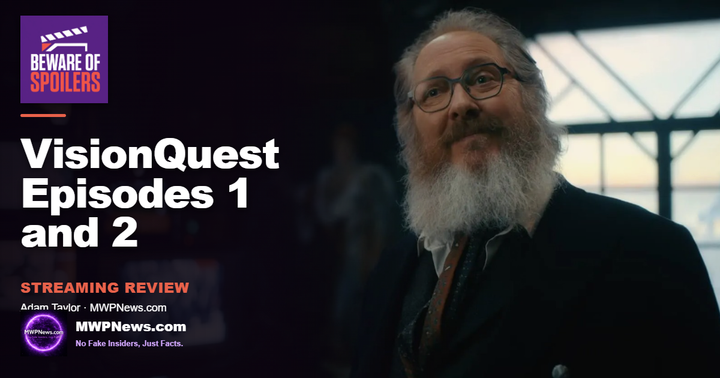
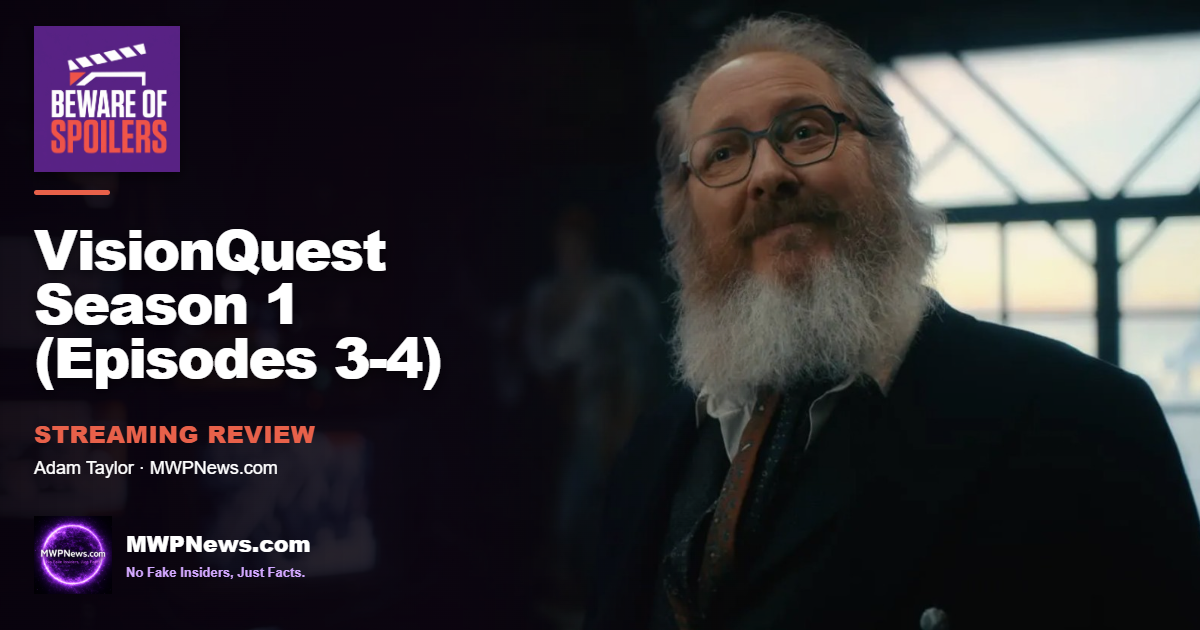
None of which means the show is failing, because what it does well it does very well, and the top of that list remains James Spader. His Ultron is the high point every week, the reason to tune in, an actor you simply enjoy watching work. As noted before, it reads heavily as his register from The Blacklist, but channeled into Ultron it harkens back to the menacing, magnetic version the Age of Ultron trailers promised and the film itself never quite delivered. The show carries a deep, knowledge of Age of Ultron, and it puts that knowledge to the exact use Marvel has always been best at: taking something audiences soured on and making it instrumental and satisfying going forward. They did it with Thor: The Dark World, mining its dire Aether setup for real payoff later, and they are doing it again here with Age of Ultron, retroactively making that film matter. It is working, and the prospect of Ultron reasserting himself by seizing Vision’s body is a compelling engine for the back half, provided the show gives it room to breathe rather than resolving it in a hasty two-episode sprint.
Episode three, by comparison, is the quieter of the pair and gets less to say for itself. The Vision-and-Tommy material has a likable dynamic but not a great deal of substance to dig into yet, and the episode reads, if not quite as outright filler, then as largely functional, concerned mostly with getting Vision to reboot so the real momentum of episode four can kick in. That is a reasonable structural job for an episode to do, but it is why the weight of these two installments lands almost entirely on the fourth.
Four episodes in, VisionQuest is still anchored by a terrific villain performance and a smart approach to its own troubled source material, and it has set up a strong hook for where Ultron takes Vision from here. The nagging worry is one of scope: a show about one android keeps generating threats that plainly belong to the whole team, and the longer it pretends otherwise, the more the seams show. Next week should reveal whether the series can keep that tension productive or whether the scale finally overwhelms the frame. Either way, this one stays on the recap docket.