
 Visit the Disney Store Store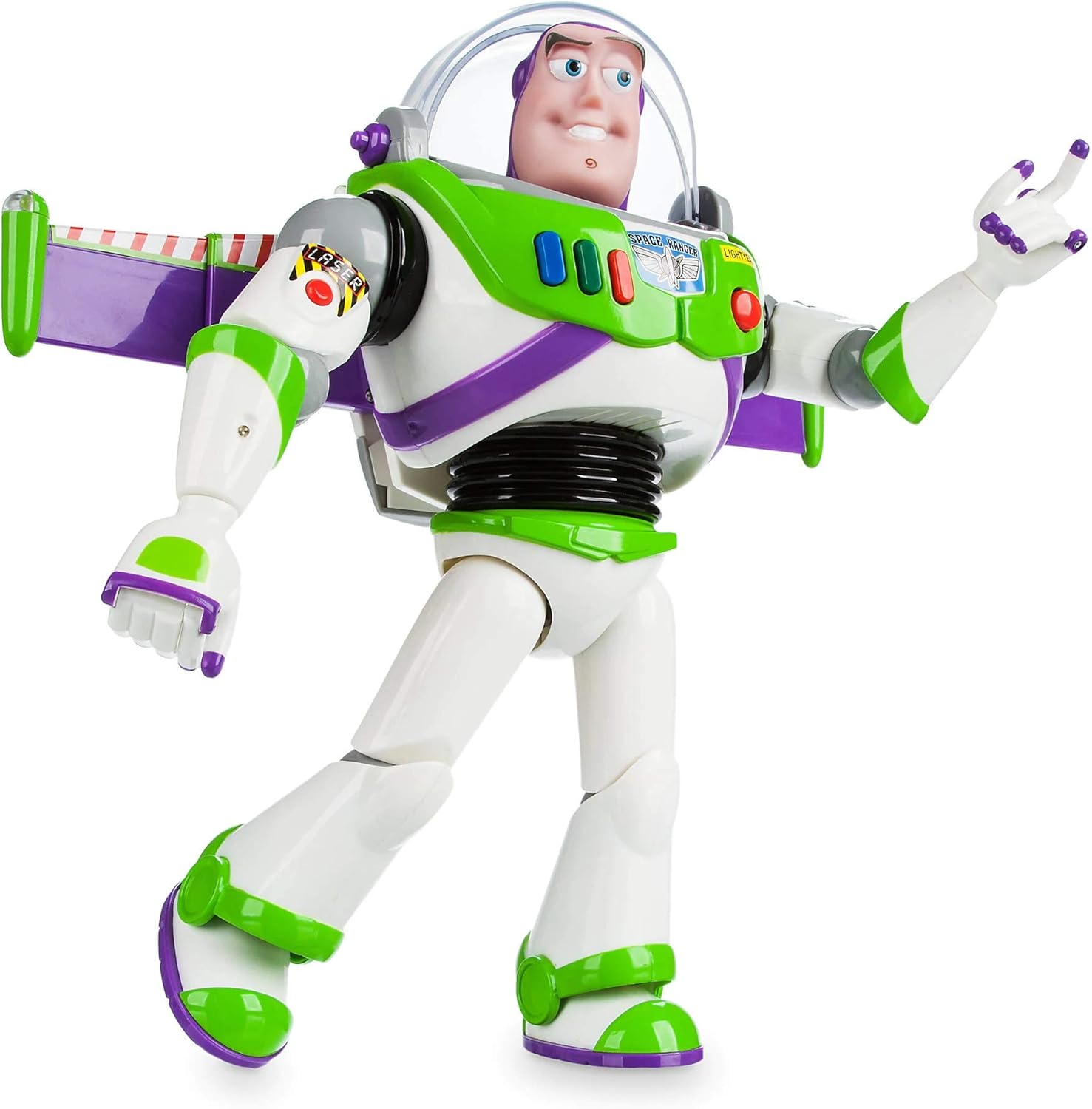
Pixar built its reputation on knowing when a story was over, and then spent the last several years proving it no longer trusts that instinct. Toy Story 3 was a perfect ending. Toy Story 4 was a coda that argued, gracefully enough, for one more lap. Toy Story 5 arrives with a harder question hanging over it, which is whether this franchise has anything left to say or is simply being kept alive because it can be, and the frustrating answer is that the movie has a real idea, a couple of them, and keeps flinching away from committing to any of them. It is not a bad film, but t is a film visibly afraid to be a pointed one, and that timidity is what separates it from the entries that earned their place.
Set a few years after the fourth film, with Bonnie now eight, Toy Story 5 pits the toys against a new kind of rival: Lilypad, a frog-shaped smart tablet voiced by Greta Lee, who arrives in Bonnie's life promising to be the more sophisticated companion a growing kid supposedly needs. As Bonnie's attention drifts toward the screen, Jessie is forced to reckon with what the toys are for in an age when children may not need them the same way. Tom Hanks, Tim Allen, and Joan Cusack return as Woody, Buzz, and Jessie, with Conan O'Brien, Craig Robinson, and Greta Lee among the new additions. Andrew Stanton directs, with Randy Newman back on the score.
To be clear, this lands at a 4 out of 5, and the reason it clears that bar despite real problems is that the strongest thread in it is incredibly affecting. This is, at its heart, Jessie's movie, and the film finally gives her the interiority it has gestured at since her debut in Toy Story 2. The arc asks her to learn that being there for a child through this phase of their life, however it changes, is the entire job, and that obsolescence is not the same as failure. If you carry any attachment to "When Somebody Loved Me," the song that turned Jessie's abandonment into the most devastating two minutes in the franchise's history, this film knows exactly where that wound is and presses on it. There is also a real visual joy in the stretches where Bonnie plays, the movie breaking into hand-drawn 2D animation to render her imagination, and those sequences are the most alive thing in it.
That said, the central problem is that the film is beholden to two masters and serves neither fully. It wants to be Jessie's story about purpose and aging out, and it simultaneously wants to be Bonnie's story about technology redefining childhood, and the two keep crowding each other off the screen so that the interesting core of each falls away in favor of the superficial. It is the same structural trap Toy Story 4 fell into, a movie trying to do two things at once and arriving at both half-finished. Bonnie herself is unusually present for a Toy Story human, who have traditionally functioned as plot devices rather than characters, the toys serving as the real avatars for the emotional questions. Making Bonnie a figure with agency that impacts the plot in her own film is an interesting swing, but it splits the focus further, and the result is a movie that gestures at depth on two fronts and digs in on neither.
The technology theme is where the flinching does the most damage, because there is a sharp film buried in the premise and Toy Story 5 refuses to make it. The questions are real and timely: how much screen time reshapes a developing kid, whether children who do not adapt to these tools fall behind socially, what it means for childhood when a device replaces a toy. Instead of grappling with any of that, the movie retreats into absolutes, framing the conflict as tech bad, toys good, and undercutting its own argument in the process. There are moments where you can feel a character being handed dialogue that is less a line than a thesis statement, a toy editorializing about kids today and their screens, and the seams show. The film also undermines itself by lumping every gadget together. The clearest example is the supporting roster of tech-toys, a GPS device, a camera, an internet-connected potty trainer, that the movie treats as ominous without ever justifying why a toddler's toilet-training toy needs to access the internet. Push on it even slightly and it stops reading as worldbuilding and starts reading as a vague gesture at something sinister the script has not thought through, a single company quietly making all of these things for reasons the film never examines.
The deeper irony is that the movie already contains the smarter version of its own argument. Playing with technological toys is not new to this world. The very first Toy Story opened on Woody having a meeting using and a toy microphone to amplify his voice and Andy does have a toy that you can type out words on to have it pronounced. A version of this film where Jessie confronts a proto-tablet, an earlier generation of the same impulse rendered obsolete (maybe something like the LeapPad those of us who were alive in the early 2000s will remember), and learns about her own fear of replacement through the lifecycle of these objects rather than through a flat tech-is-bad framing, would have hit the same emotional target with far more honesty. The film keeps brushing against that idea and declining to develop it, which is the milquetoast tendency that has crept into recent Pixar more broadly, the same softening that had Hoppers asking you to sympathize with its environmental villain because he has a mom. The studio keeps locating real, thorny questions and then sanding the thorns off.
It is worth addressing the Lightyear-shaped elephant in the room, because the film's handling of it is telling. Toy Story 5 features a sequence with an army of malfunctioning Buzz Lightyear units, a fun bit that doubles as the franchise's explanation for why a toy freezes when a human enters the room, and it threads in a second Star Wars reference as the Buzzes confront who they are as toys. But the movie pointedly includes no reference whatsoever to Lightyear, no Sox, no supporting cast from that film, nothing. There was an obvious opening for at least a cameo, and the scene where the Buzzes learn they're toys reference Toy Story 2's relationship between Buzz and Zurg, not the different continuity that Lightyear established. The deliberate absence reads as Pixar quietly conceding that Lightyear did not land and choosing to pretend it never happened. It is hard to fault the instinct, but it raises an honest question about what the point of that film was if its own franchise will not acknowledge it, and it makes the case, more than ever, that the better archival move would be to finally remaster the original Buzz Lightyear of Star Command movie and TV show and let that stand as the in-universe artifact instead.
There is also a looming problem this film cannot solve and can only postpone, which is age. These characters are meant to be timeless, but the voices delivering them are not, and you can hear the years now, the entire cast sounding older than ageless toys should. Recasting is coming, for Woody and Buzz and eventually Jessie, and it is not a Pixar problem alone but a Disney-wide one, the same wall that CGI de-aging keeps failing to climb, where a digitally smoothed face still moves like the older performer underneath it. The franchise will have to confront it, and Toy Story 5 is content to leave that for another day.
Toy Story 5 is a perfectly watchable film that left me, more than anything, with the feeling of being just slightly off, and slightly off is not a satisfying place to be left. It is not aggressively bad the way a misfire is, and unlike the fourth film, there is enough here, the Jessie material, the imagination sequences, the character chemistry, that a rewatch might soften the reservations. But nothing in it demands that return either. Hopefully Pixar eventually decides either to commit fully to the hard questions it keeps raising or to let these toys rest with the dignity Toy Story 3 already gave them. Beating the same horse gently is still beating it. This one is good, and good is no longer the same as necessary.
 AUTHORS